 17. The Marketing Strategies of Deaf Museums
To the Table of Contents
0.0 of 5 (0 Votes)

Intro Chapter 17
There is no 'magic bullet', a marketing strategy that will guarantee success for all.
In our survey, we asked the Deaf Museums what tools they use.
17.1 The Marketing of Deaf Museums
Advertising
In our survey of Deaf Museums, we asked our contact persons about advertising:
"Does your Museum have a website? Do you use Social Media? Do you advertise in other ways? What - in your opinion - is the most effective way to get people to visit your museum?
All Deaf Museums that responded had a website and used social media: Facebook and Instagram. Kuurojen Museo also uses print: the magazine of the deaf. The Norsk Døvemuseum also advertises in the local (mainstream) newspaper, when they have a special activity at the Museum.
The Musée d'Histoire et de Culture des Sourds in France reports that local newspapers often talk about their activities as well as magazines for the Deaf. They also answer our question about the most effective way: "Talk about it as much as possible and make it known by all means, for example during association celebrations, conferences accompanied by flyers, etc."
They also have a number of videos on YouTube about the Museum.
17.2 A Museum Shop?
The Norsk Døvemuseum has a small museum shop with selected products, see below.
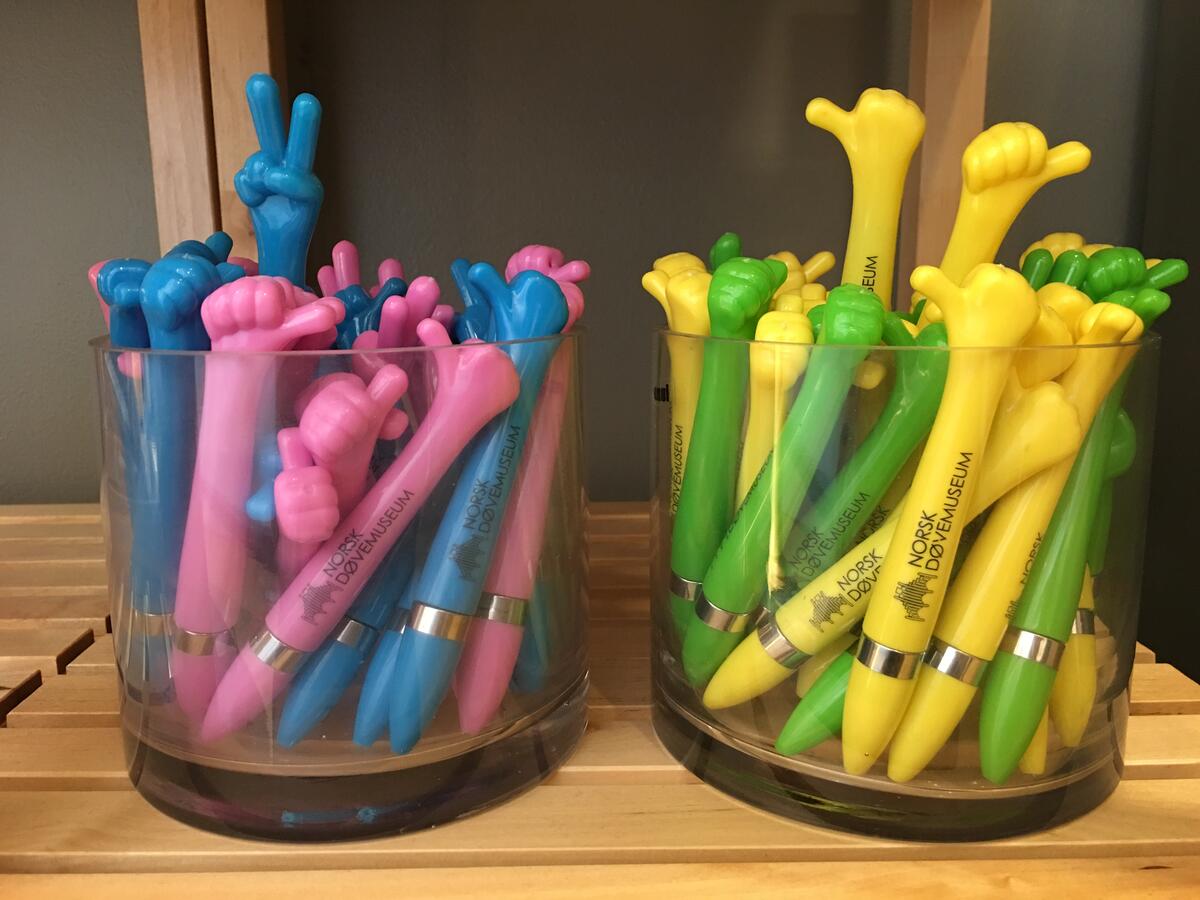
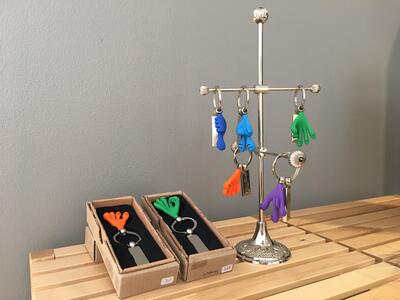
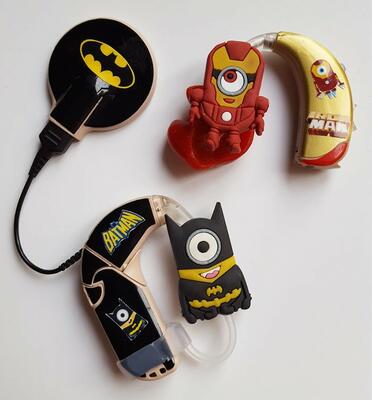
The Deaf Heritage Centre in Ireland sells mugs with their logo, the Irish manual alphabet, or a photo of Thomas Mahon, see below.

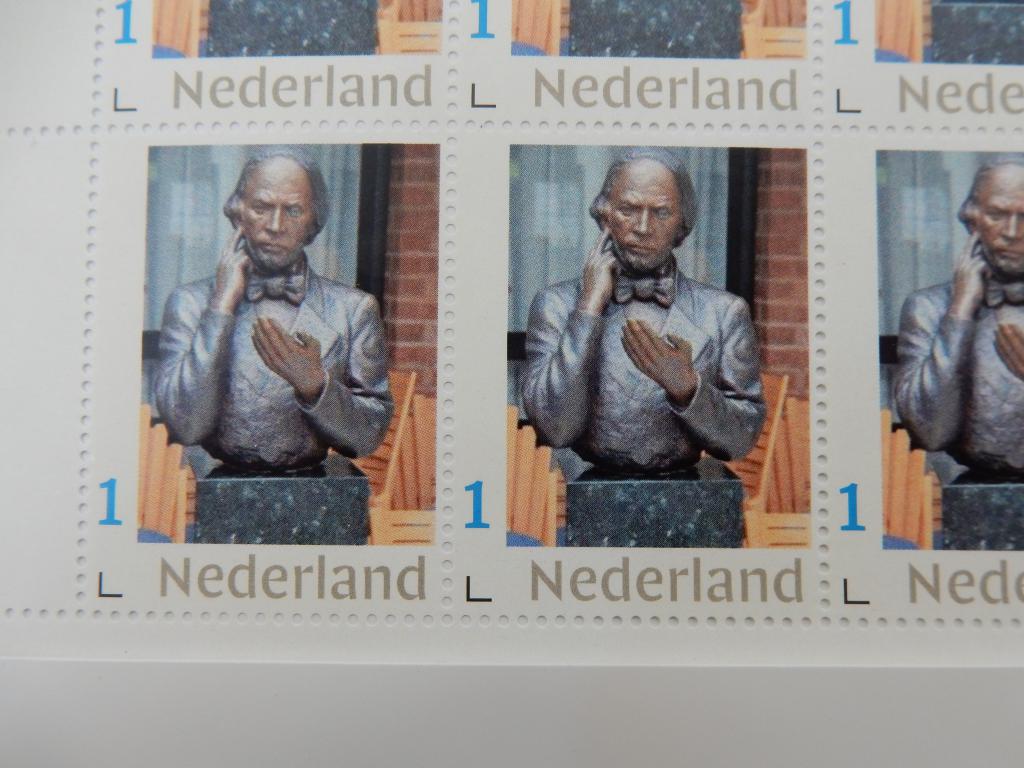
As far as we know, the Deaf Museums do not sell postcards, calendars, or posters with photos of Deaf events or important people in Deaf history. In the Netherlands, one can order postage stamps with a personal design. As an award, we had stamps printed with a photo of a statue of Andreas Christian Møller, the founder of the first Deaf school in Norway. They can actually be used - in the Netherlands - and are a nice way of promoting Deaf history or a Deaf museum.
Books
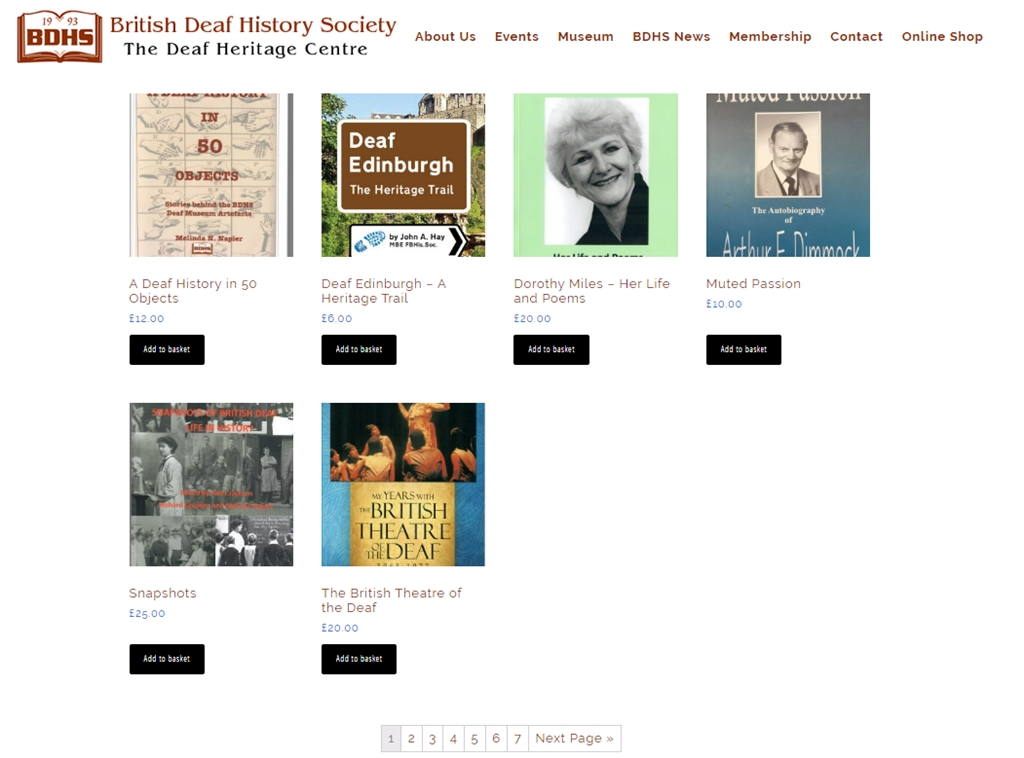
The Deaf Heritage Centre UK is hosted on the website of the British Deaf History Society (BDHS). BDHS has a webshop that sells many books and journals about Deaf history.
17.3 The Brand Strategies of Deaf Museums
Deaf Museums vary in the names that they use for their Museum. In the table below, you can see the names in the national language and in English.
|
Kuurojen Museo |
Finnish Museum of the Deaf |
| Norsk Døvemuseum |
Norwegian Museum of Deaf History and Culture Norwegian Deaf Museum |
| Musée d'Histoire et de Culture des Sourds | Museum of the History and Culture of the Deaf |
|
Different names are used on the website of the Museum in Manchester:
|
|
|
The Deaf Heritage Centre (Ireland) |
|
| Døvehistorisk Selskab |
Danish Deaf History Society |
Some of these names are stronger 'brand' names than others. The Deaf Heritage Centre in the UK uses a number of different names on its website, which is confusing. It shares one of its names with the Deaf Heritage Centre in Ireland.
The logos of these Deaf Museums:
 Norsk Døvemuseum

 British Deaf History Society - no separate logo for the Museum
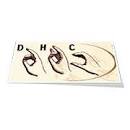 Deaf Heritage Centre Ireland
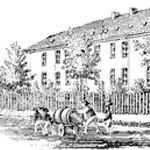 Døvehistorisk Selskab
17.4. Websites of Deaf Museums
Most Deaf Museums in Europe do not have a budget or expertise for professional marketing. One Museum, the Tommaso Pendola Museum in Siena, does not even have a website. The websites of some of the other Deaf Museums in Europe are hard to find, especially for people from other countries. Some have only limited information.
Below some examples:
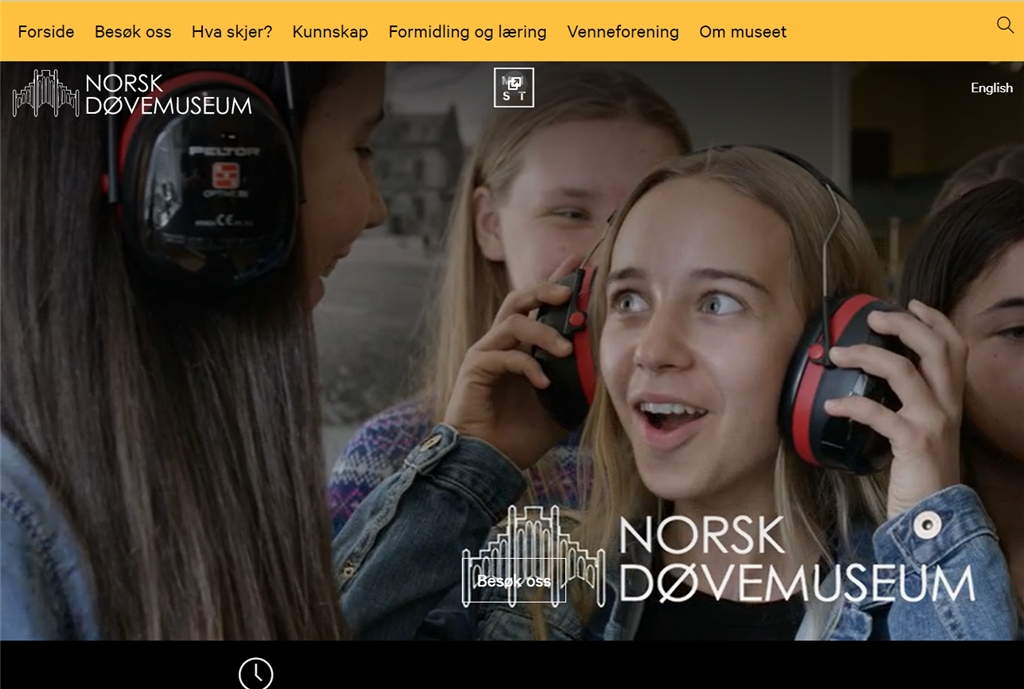
On the website of the Norwegian Deaf Museum , you see a video of hearing visitors of the Rom X exhibition - an exhibition for hearing visitors. Some pages are available in English text. The page "Visit us" has a video in Norwegian Sign language:{ modal url=" https://dms04.dimu.org/multimedia/0136MvHUJZAK.mp4?mmid=0136MvHUJZAK"}Visit us{/modal}
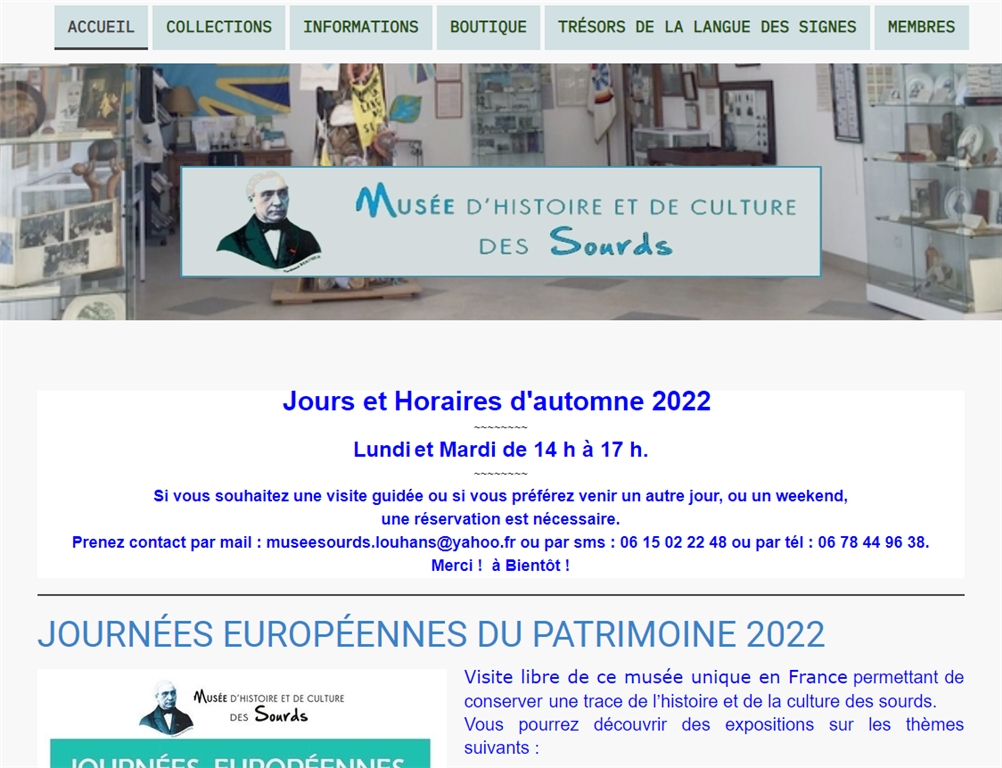
The website of the Musée d'Histoire et de Culture des Sourds in France (see above) opens with a lot of information, but only in French. Foreign visitors will have to use Google Translate to find the information they want.
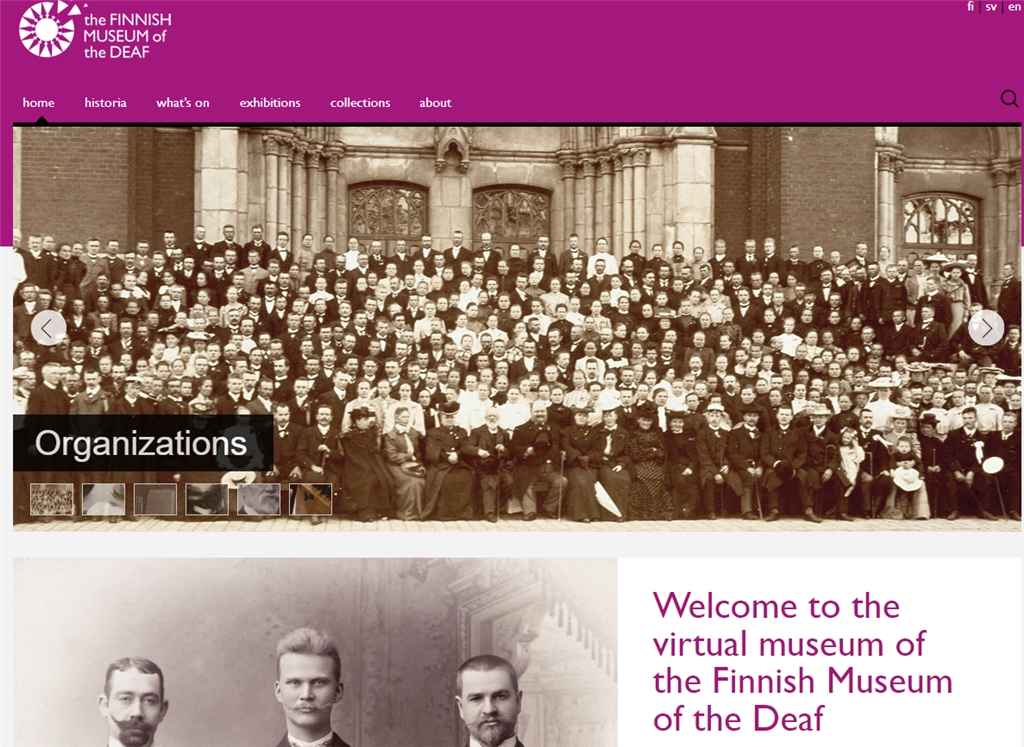
The website of the Finnish Deaf Museum, Kuurojen Museo, shows the online Museum and has only limited information about the physical exhibition in Helsinki. Most pages are available in Finnish, Swedish and English text. Some information is available in Finnish Sign Language
Below, the results of a Google search that we did, October 2022, from the perspective of a foreign visitor:
| Search Term | Google's Top Results |
| Deaf Museum |
|
| Deaf Museum Norway |
|
| Deaf Museum Finland |
|
| Deaf Museum Denmark |
|
| Deaf Museum UK | |
| Deaf Museum Ireland |
|
| Deaf Museum France |
|
| Deaf Museum Italy |
|
Of course, the main target group of the Deaf Museums in Europe are visitors from their own country, who will use search terms in the national language. But two conclusions are obvious:
- Deaf Museums in Europe are not easy to find for people who use English search terms.
- Our websites, www.deafmuseums.eu and www.deafhistory.eu are easy to find by Google and include links to the national websites of the Museums.
