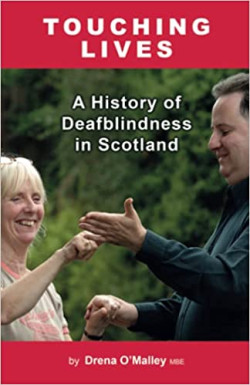
Touching Lives: A History of Deafblindness in Scotland
Author: Drena O’Malley
Publisher: , 2021
"Touching Lives tells the stories of deafblind people from the 19th and the 20th centuries. Their inspirational lives are recorded, both their achievements and their disappointments, in a matter of fact way. Which allows the reader to understand some of the implications of a life without sight or sound. Deafblindness is a uniquely disabling condition which isolates the individual in a way few other disabilities do. Their need for communication support, access to information, and help with finding their way around are not well-known or indeed even recognized and therefore these needs are often unmet.
The book goes on to tell of how National Deafblind League’s Scottish office, an outpost set up to serve deafblind people in Scotland in 1989, went onto become known as an organisation which “punched above its weight”. The need for a specialist service to meet their communication needs was recognized in 1989 and the development of that service began in the early 90s and continues today. Touching Lives recounts the growth of Deafblind Scotland’s guide/communicator service, the years spent developing it, from employing the first guide to training a workforce, to providing thousands of hours of service hours annually, as it does today.
A section on communication will be of interest to those interested in sign language and tactile sign language about which little is written.
Since the 90s deafblind people have sought to influence the decision-making processes which impacted their lives. They no longer wanted to be spoken about but to be spoken to, and to be heard. This is only possible if an effective, professional guide/communicator service is available to them.In essence they wanted to speak for themselves. How they set about doing this and the successes and failures they encountered are recounted in some detail, as are the repercussions of these outcomes.
The legislation, guidance and recommendations which have come into force in recent years have played a major part in influencing whether deafblind people could achieve their ambitions or not and this is included in the framework in which these issues are discussed in the book
Touching Lives records some of the goals achieved by deafblind people. Achievements which may be run of the mill for most sighted-hearing people but require a superhuman effort on the part of a deafblind person. These range from climbing Mount Kilimonjaro to winning a chess competition to running a restaurant.
Touching lives includes a description of the journey travelled to build a new Training and Development Centre for deafblind people on the “Field of Dreams” site from negotiating to buy the site, to fundraising the costs of that purchase, to further raising the build costs, to appointing a contractor to complete the build. From beginning to end the merits and demerits of acquiring new build accommodation are explored. This gives a unique opportunity to read a history of such a journey rather than advice about such a journey. "